



featured item

Why art prints are a big deal for antique & vintage collectors
Posted by Chris on 30/01/2026
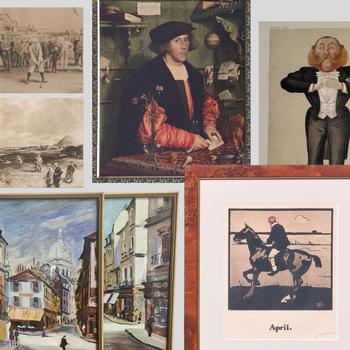
If, like us, you love the thrill of finding something with history, character, and a story behind it, you may want to start paying attention to prints – if you haven’t already. From engravings and etchings, to lithographs, and silkscreens, they’re seeing a surge in popularity amongst collectors.
That makes perfect sense: prints are affordable, easy to live with, rich in artistic heritage, and they open up collecting opportunities that might usually be out of reach to the average joe. And right now, the market for them is booming.
If you normally spend your time rummaging through antique shops, leafing through auction catalogues, or hunting down vintage treasures, here's why prints might soon be your new favourite category.
In this article:
- A (very) quick journey through print history
- Why prints are suddenly everywhere
- What makes prints so appealing to collectors?
- Your easy guide to buying and collecting prints
.jpg)
Late medieval German inventor Johannes Gutenberg created the first printing press based on previously known mechanical presses and a process for mass-producing metal type. By the end of the 15th century, his invention and widescale circulation of the Gutenberg Bible became responsible for a burgeoning economical book publishing industry spreading globally across Renaissance Europe (image by Daniel Nikolaus Chodowiecki - National Library of Poland, Public Domain)
A (very) quick journey through print history
Prints have been around for centuries (there’s some debate as to who invented the printing press, but it’s generally agreed as a 15th century invention). Renaissance artists like Dürer and Schongauer used them to spread their images far and wide before social media was even a concept in anyone’s mind.
By the 1600s, Rembrandt was using printmaking as a playground for experimentation — tweaking light, shadow, and atmosphere in ways that still feel fresh today.
Fast-forward a couple of centuries and artists like Goya, Picasso, Miró, and Matisse turned prints into a full-blown art form, not just a time-saving method of reproduction.
For collectors of antiques and vintage items, this long tradition is part of the appeal: prints aren’t just things to display on your wall at home; they’re real slices of artistic history.
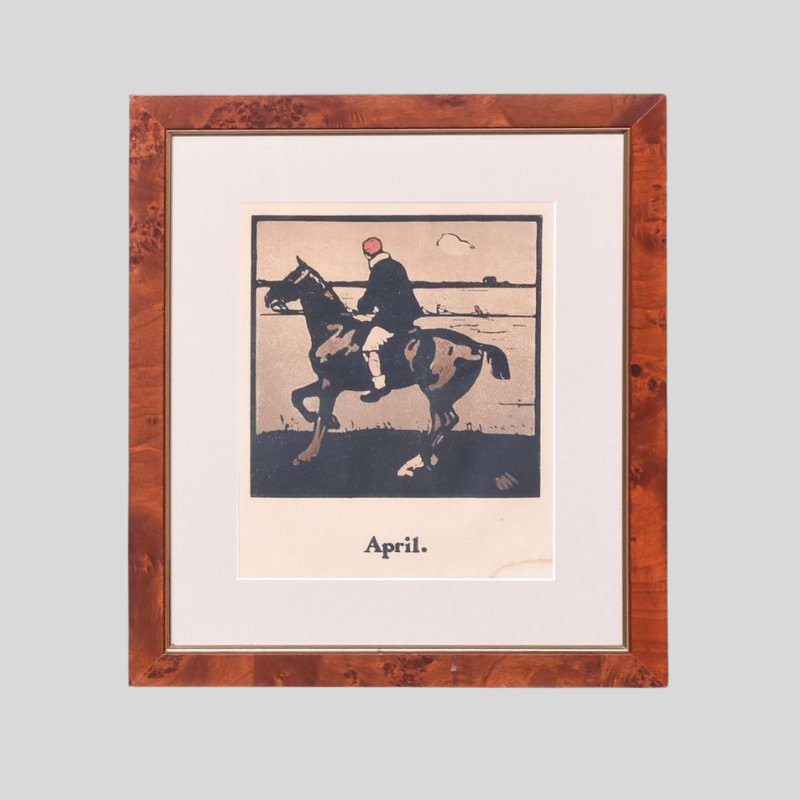
Pictured: A set of 12 original coloured sporting prints by ‘William Nicholson’s’, published by ‘William Heinemann, London, 1898.' £4,000 / $5,522
So… why are prints suddenly everywhere?
The print market isn’t quietly bubbling along anymore — it’s genuinely thriving. Auction houses are running more print-focused sales than ever, and online platforms are buzzing with activity.
What we love about prints is that whilst you might not find an original Miro or Matisse in your budget, there are plenty of artists whose work is collectable, at much more affordable (and available) prices.
In the last decade alone, print sales worldwide have more than doubled. They now make up a surprisingly large chunk of all lots sold at auction. People are really starting to pay attention to prints.
For vintage collectors, prints hit the sweet spot between historical value and everyday accessibility.
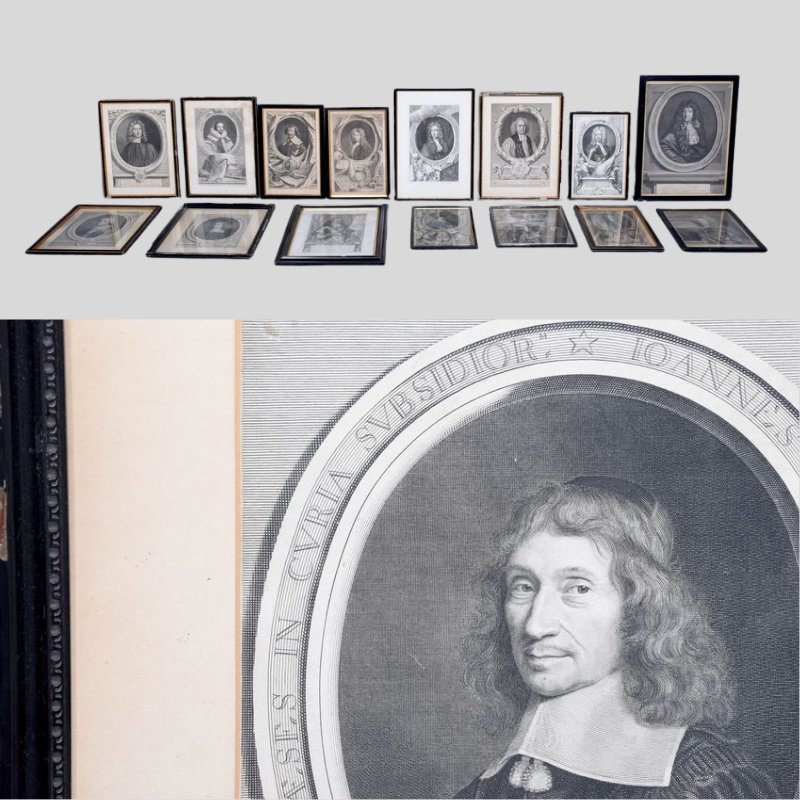
Pictured: A collection of fifteen 17th and 18th century prints, depicting many important characters of the day, including G Walker, Prince George of Albermale, John Russell, Earl of Peterborough, Robert Boyle the Earl of Warwick and others. £2,250 / $3,106
What makes prints so appealing to antique & vintage collectors?
1. The prices are genuinely accessible
If you’ve always admired a major artist but assumed you’d never own anything by them — prints change the game. You can often buy hand-signed or limited-edition works for a few hundred pounds or dollars.
That means more room to explore, experiment, and build a collection around styles or periods you love.
2. They’re lightweight, shippable, and display beautifully
Let’s be honest: prints are simply easier than oil paintings or delicate ceramics.
You can:
- Store them safely
- Ship them without panicking
- Frame them to suit your interior
- Swap them around whenever you want a change
Collectors who are used to caring for fragile antique items tend to appreciate this practicality.
3. Limited editions make collecting feel exciting
By the mid-20th century, artists like Warhol, Haring, and Hockney cemented the idea that prints could — and should — be signed, numbered, and authenticated.
For collectors, this means:
- You know how many exist
- You know where your print sits in the edition
- You know that scarcity supports future value
And yes — some editions have hit eye-watering prices at auction. But many remain beautifully attainable.
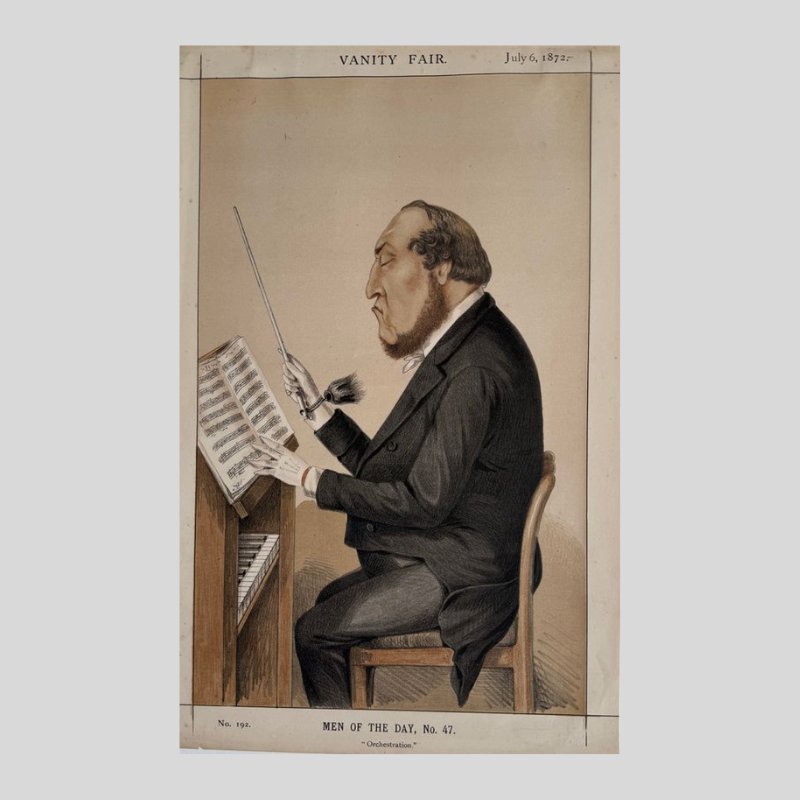
Pictured: Vanity Fair Print. July 6 1872. Conductor Michael Costa. £80 / $110
Your easy guide to buying prints
1. Pay attention to the edition
Look for:
- Limited, numbered editions
- Early states or proofs (AP, EA, BAT)
- Hand-signed works (always preferred)
Avoid endless open editions if you care about long-term value.
2. Condition matters — a lot!
Even tiny issues can affect value. Check:
- Paper quality
- Evidence of foxing, folds, or tears
- Colour freshness (especially in screenprints)
- Whether it’s been framed with proper, acid-free materials
Collectors of vintage ephemera will find this very familiar.
3. Research the workshop or printer
Some print studios are legendary. If your print comes from a major workshop, that’s a very good sign.
4. Always look for provenance
The more documented history, the better. This includes:
- Certificates
- Gallery labels
- Auction listings
- Museum connections
Any antique or vintage collector knows how important provenance is - for us it sparks the imagination of the story of how the print ended up in your hands today.
5. Know where to shop
Great places to explore include:
- Auction houses (big and local alike)
- Specialist print dealers
- Reputable online platforms
- Art market databases
And of course — fairs, antique centres, and estate sales can still produce gems.
6. Keep an eye on the market
Well-known names remain reliable, but collectors can find plenty of joy - and value - by exploring lesser-known or rediscovered artists. There’s plenty of room for taste, intuition, and curiosity.
Many collectors of specific artists find it helpful to set up alerts online so that they get instant notifications when a work of theirs goes on sale at auction.
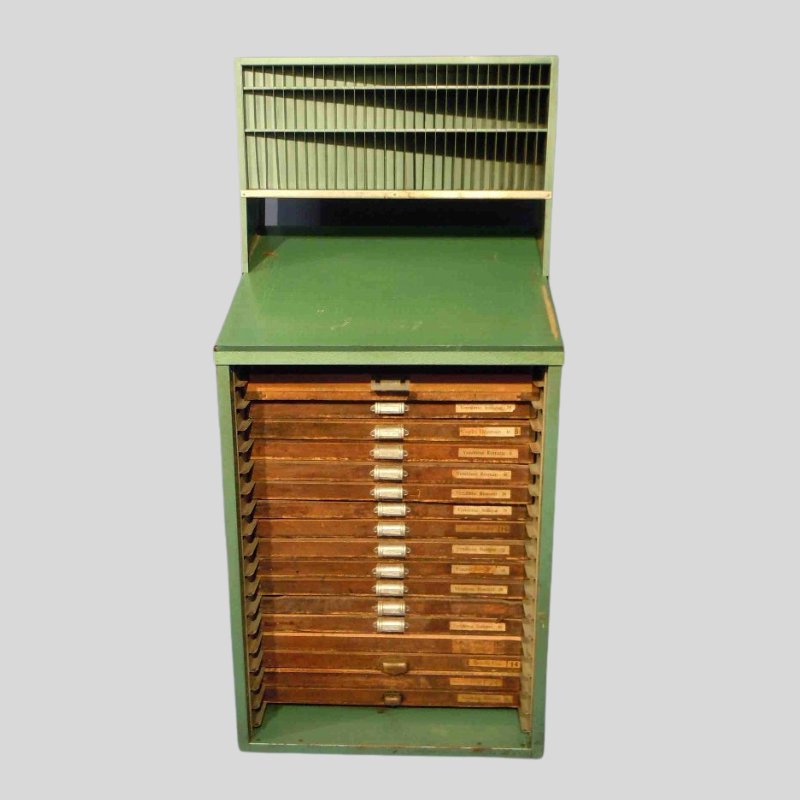
Pictured: if you're starting to collect prints, you could either display them - or keep them safe in something like this lovely rare piece of industrial furniture called "Meuble industriel" in iron. £940 / $1,297
To wrap it up…
If you love collecting beautiful, meaningful objects with plenty of history behind them, prints are absolutely worth exploring. They strike a fabulous balance of affordability, artistic heritage, craftmanship and investment potential - what's not to love?
And whether you’re after a Renaissance-style engraving, a bold mid-century lithograph, or a contemporary silkscreen with flair, the print market is full of opportunities.
> Explore prints for sale on Antiques.co.uk